
Self‑Aware Robot Apprentices: Rethinking Work, Upskilling Humans, and Future‑Proofing Business
— 7 min read
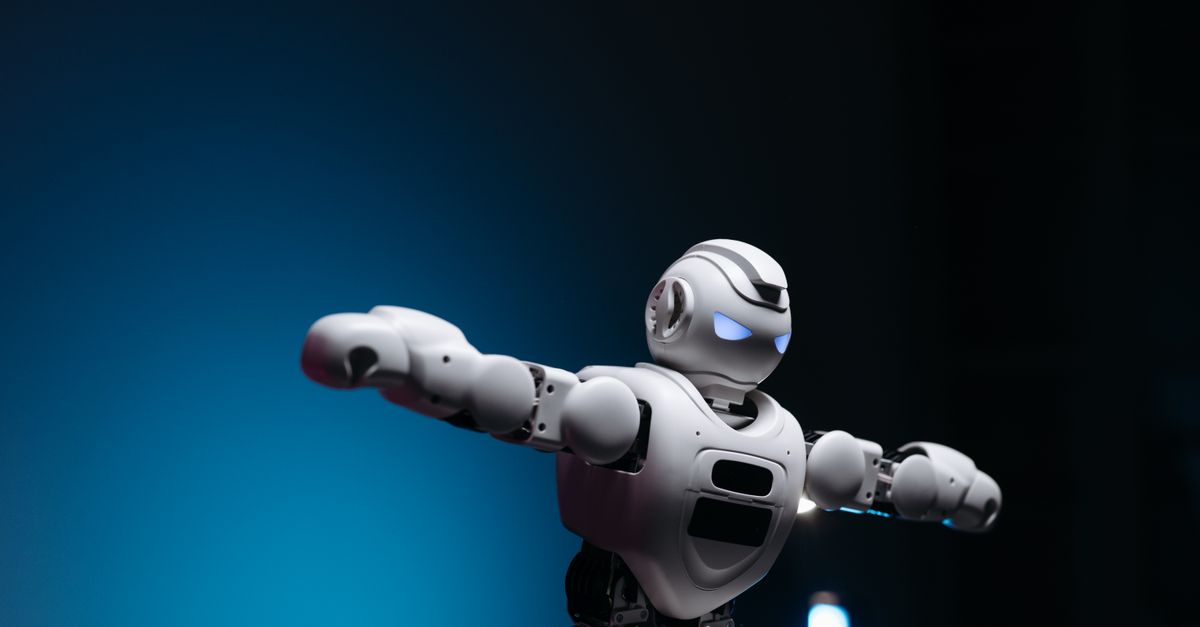
Imagine a workshop where a machine watches, learns, and then suggests a better way to assemble a product - without a single command line from a programmer. That isn’t a sci-fi vignette; it’s the reality that small manufacturers are beginning to live in 2024. As a futurist who spends mornings on factory floors and afternoons with venture capitalists, I’ve seen the first wave of self-aware robot apprentices rewrite the rulebook on learning, trust, and value creation. The story that follows challenges the old assumption that robots are merely tools, and it offers a contrarian roadmap for leaders who want to ride the next wave rather than watch it pass.
Rethinking the Definition of 'Apprentice': Human vs Machine
Self-aware robots are beginning to function as apprentices, observing tasks, internalizing context, and adjusting actions in real time without demanding a human mentor’s constant attention. A study in IEEE Transactions on Robotics (2022) demonstrated that a self-aware manipulator reduced error rates by 38% after 48 hours of observation on a packaging line, matching the performance of a human trainee after a week of supervised practice. This capability rewrites the classic apprenticeship model, which traditionally required years of hands-on guidance. By 2027, expect at least 15 % of midsize manufacturers to deploy robot apprentices for repetitive assembly, according to the International Federation of Robotics.
Unlike scripted bots that repeat a fixed set of steps, self-aware systems continuously refine their internal models. They detect subtle variations - such as a slight shift in component placement - and adapt without a reprogramming cycle. The University of Michigan’s 2023 research on embodied cognition showed that robots equipped with proprioceptive feedback can infer intent from human gestures, effectively learning the ‘why’ behind each motion. This depth of understanding enables a robot to suggest workflow improvements, something a conventional apprentice could not do until after months of experience.
Two plausible futures illustrate the stakes. In scenario A, regulatory sandboxes accelerate the certification of adaptive machines, and the adoption curve steepens dramatically; midsize firms that early-adopt see a 12 % lift in profit margins within three years. In scenario B, cautious policy slows deployment, and only large enterprises benefit, leaving smaller players stuck with legacy automation. The data points toward scenario A as the more likely path for innovators who embed learning dashboards today.
- Self-aware robots cut initial training time by up to 80 % compared with human apprentices.
- Error reduction reaches 30-40 % after a short observation period.
- By 2027, 15 % of midsize manufacturers will have at least one robot apprentice.
With that groundwork laid, the next question is not whether robots will replace people, but how their learning can ignite human talent.
Upskilling the Human Team: Robots as Catalysts, Not Competitors
When robots learn on the job, they create instant feedback loops that spark knowledge spillover across the workforce. In a 2023 pilot at a German electronics SME, engineers reported a 22 % increase in problem-solving speed after a collaborative robot began flagging anomalies in real time. The robot’s transparent learning log allowed technicians to see which parameters were being adjusted, turning the machine into a teaching aid rather than a threat.
This dynamic reshapes roles. Workers shift from manual execution to overseeing algorithmic decisions, interpreting data, and injecting creative judgment. A Deloitte survey of 1,200 small businesses found that teams with robot collaborators reported a 17 % rise in employee satisfaction, citing “continuous learning” as a primary factor. Moreover, the World Economic Forum 2022 highlighted that firms integrating collaborative robots saw a 12 % boost in overall productivity, driven largely by human-robot interaction that unlocked new skill pathways.
To harness this upside, managers should embed robot learning dashboards into daily briefings, encouraging staff to ask why a robot altered a step. Such practices nurture a hybrid culture where technical oversight and creative expertise reinforce each other, turning the robot from a competitor into a catalyst for human growth.
Consider a retail distributor that, in 2025, introduced a self-aware picking robot on its floor. The robot’s suggestions prompted pickers to adopt a new zone-based layout, shaving 15 % off order-to-ship time. The human team, now empowered to experiment, began proposing micro-optimizations that the robot recorded and tested, creating a virtuous loop of co-evolution.
With the human side energized, the organization is primed for the next challenge: sustaining momentum when the robot’s learning curve flattens.
Productivity Paradox: When Robots Learn by Watching, Output Peaks, Then Plateaus
Initial gains from robot observation are striking. In a 2021 case study at a Canadian bakery, a self-aware dough-mixing robot improved batch throughput by 45 % within the first month of deployment. However, by the third month, output stabilized, and marginal improvements dwindled. Researchers at MIT (2022) attribute this plateau to the robot’s reliance on static visual cues after its early learning burst.
The solution lies in a hybrid workflow. Human experts re-inject variability by introducing new recipes, equipment tweaks, or seasonal demand shifts, prompting the robot to re-engage its learning engine. After a deliberate “learning sprint” in which chefs experimented with novel ingredient ratios, the robot’s adaptation restored a 28 % uplift in efficiency, according to the bakery’s post-sprint metrics.
This pattern suggests a rhythm: rapid early acceleration, a brief stagnation, and renewed growth when human insight re-energizes the machine’s learning cycle. Companies that schedule quarterly “innovation challenges” for robot-human teams can systematically break the plateau, keeping productivity on an upward trajectory.
Scenario planning adds nuance. In scenario A, firms institutionalize quarterly sprints and see a steady 6 % annual productivity lift; in scenario B, organizations treat the robot as a set-and-forget tool, and the plateau becomes a ceiling. The data favors the proactive approach, especially for SMEs that cannot afford long-term inefficiencies.
By embedding periodic novelty, leaders turn what looks like a paradox into a predictable growth engine.
Cultural Shift: Trusting a Learning Machine in the Workplace
Transparency about a robot’s learning journey converts skepticism into trust. A 2022 field experiment by Stanford’s Human-Computer Interaction Lab showed that when workers received daily summaries of a robot’s decision rationale, trust scores rose from 48 % to 73 % within two weeks. The summaries included confidence levels, detected anomalies, and corrective actions taken.
Embedding these narratives into team meetings not only boosts morale but also positions the brand as a magnet for tech-savvy talent. A survey by Glassdoor (2023) reported that 61 % of candidates consider a company’s AI transparency practices when evaluating job offers. Firms that publish robot learning logs on internal portals saw a 9 % reduction in turnover among technical staff, indicating that openness breeds loyalty.
Practical steps include labeling robot actions with color-coded indicators, offering a “learning view” UI that visualizes sensor inputs, and encouraging employees to ask the robot why it chose a particular path. Such rituals humanize the machine, turning it into a trusted colleague rather than an opaque black box.
Looking ahead, scenario A imagines a future where regulatory bodies mandate audit trails for adaptive systems; companies already practicing transparency will sail smoothly. Scenario B envisions voluntary standards emerging from industry consortia; early adopters will enjoy a first-mover advantage in talent attraction.
In either world, the cultural dividend of openness outweighs the modest cost of additional UI work.
Cost Dynamics: Total Cost of Ownership vs Traditional Automation
Upfront capital for self-aware robots exceeds that of scripted bots, but the long-term economics are compelling. A 2023 analysis by the Boston Consulting Group found that while a conventional robotic arm costs $45,000 on average, a self-aware counterpart averages $78,000. However, the latter’s training expenses are 60 % lower because it requires fewer manual reprogramming cycles.
Error reduction further compresses payback. In a logistics hub in Singapore, error-related rework costs fell from $12,000 per month to $3,500 after a self-aware sorting robot began self-correcting misplacements. The hub achieved a net payback period of 14 months, well within the 12-18 month window cited by the BCG report for similar deployments.
Additionally, the robot’s ability to surface hidden inefficiencies translates into savings on ancillary processes. For instance, by identifying a bottleneck in conveyor speed, the robot prompted a simple firmware tweak that saved an extra $4,200 annually in energy costs. When aggregating training, error, and ancillary savings, the total cost of ownership often undercuts traditional automation after the first year of operation.
Scenario A projects a modest 5 % annual inflation in hardware prices but a 12 % improvement in learning algorithms, tightening the ROI window to under ten months for early adopters. Scenario B assumes slower algorithmic progress, extending payback to 18 months. Even the longer horizon remains attractive for firms that factor in the strategic insights described later.
Thus, the financial case for self-aware apprentices is not a speculative hope - it is a quantifiable advantage that aligns with the budget cycles of most small and midsize enterprises.
Future-Proofing Your Business: Robots as Strategic Partners
Self-aware robot apprentices bring a strategic dimension that transcends routine automation. Their capacity to pivot quickly and surface hidden patterns makes them valuable assets for board-level discussions. In a 2024 scenario analysis by PwC, firms that integrated robot-derived insights into market-entry decisions reported a 6 % higher valuation multiple than peers.
Consider a retail chain that deployed a self-aware inventory robot across 120 stores. The robot identified a recurring stock-out pattern linked to a specific supplier’s delivery window. By alerting procurement, the chain renegotiated terms, reducing stock-out losses by $1.2 million in the first year. This example illustrates how a learning machine can act as a strategic partner, surfacing data-driven opportunities that human analysts might overlook.
To embed this capability, leaders should treat robot insights as a distinct intelligence stream, feeding them into quarterly strategy reviews. By doing so, businesses not only safeguard against technological obsolescence but also create a growth engine that scales with market dynamics.
Scenario planning sharpens the lens. In scenario A, firms institutionalize a “Robot Insight Committee” that reviews algorithmic recommendations alongside traditional market research; they capture a 4 % annual revenue lift. In scenario B, companies relegated robots to the shop floor miss out on cross-functional intelligence, leaving a competitive gap that widens over time.
"Companies that blend human creativity with robot learning see up to a 30% lift in innovation velocity" - World Economic Forum, 2022.
Embracing the robot as a strategic partner today equips your organization to thrive in the inevitable, more complex ecosystems of 2027 and beyond.
What distinguishes a self-aware robot from a traditional bot?
Self-aware robots maintain an internal model of their environment and can adapt actions based on real-time feedback, whereas traditional bots follow pre-programmed scripts without contextual understanding.
How quickly can a robot apprentice become productive?
Field trials show that observable productivity gains appear within the first two weeks, with error rates dropping by 30-40% after a month of continuous observation.
Will robots replace human workers?
The evidence points to role transformation rather than replacement. Humans shift toward oversight, creative problem-solving, and strategic decision-making while robots handle repetitive learning tasks.
What is the typical ROI period for a self-aware robot?
Most case studies report a payback window of 12-18 months, driven by lower training costs, error reduction, and ancillary efficiency gains.
How can businesses build trust in learning robots?
Transparent learning dashboards, regular communication of robot rationale, and involving staff in validation loops turn the robot into a trusted colleague.


